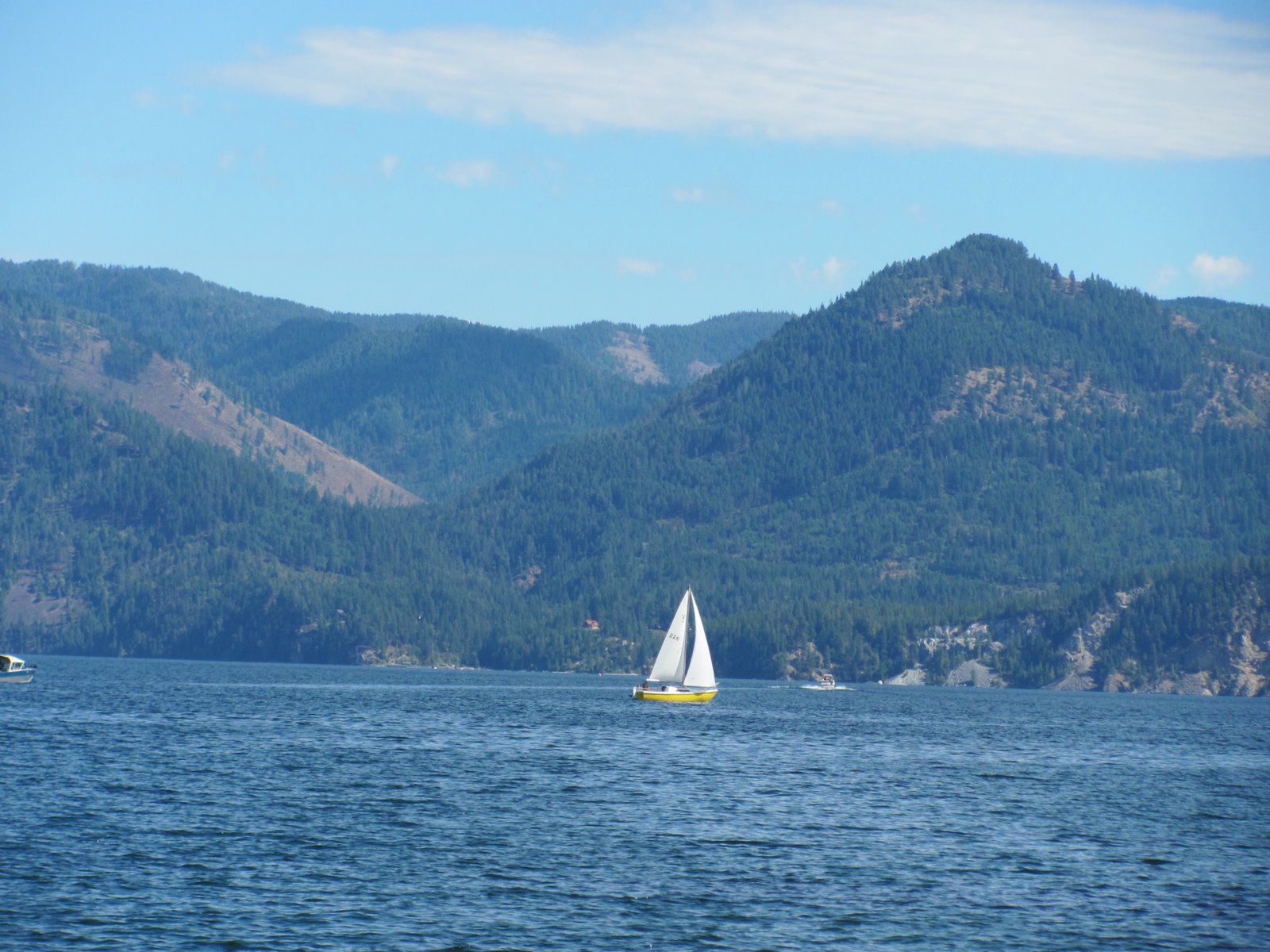
Sunday, September 12, 2010

Trip through the Bitterroot Valley


Following south along Highway 93 our next port of call was at Stevensville, MT. We wanted to see the first permanent non-Indian settlement of Montana.

Imagine the vast wilderness that was the northern Rockies in the fall of 1841. You and your little band of fellow Jesuit "blackrobes" have trekked westward across half a continent and now you stand on the bank of a wide, shallow, sparkling river coiling through a broad, meadow-lush valley nestled in these wild highlands.
At the request of the Salish and Nez Perce Tribes, Catholic Jesuits, led by Father Pierre DeSmet, S.J. established St. Mary's Mission in the Bitterrroot Valley in 1841.

Fr. DeSmet and his party erected Montana's first church immediately west on the bank of the Bitter Root River. They planted the first gardens, and harvested the first wheat and oats, practiced the first irrigation, bred first livestock, taught first classes and organized the first musical band. St. Mary's was the site of the first flour and lumber mills.

The mission thrived. In November 1845, Fr. Anthony Ravalli, S.J., arrived at St. Mary's after being recruited from Italy by Fr. DeSmet. Fr. Ravalli was a true renaissance man in addition to being a Jesuit priest. He was Montana's first physician, surgeon and pharmacist. Fr. Ravalli was an architect, artist, sculptor and built the first gist mill and saw mill. He was assigned to St. Mary's during 1845-1850 and again from 1866 until his death in 1884. He rests in the cemetery west of the chapel.

St. Mary's ceased to be an Indian mission in 1891, when the Flathead-Salish were forced to move to a reservation.

Today, the Mission Chapel is surrounded by historic buildings, telling the story of the beginning. "Dear Old St. Mary's", as father Ravalli called it, stands as a monument to those heroic sons of the mountains, through whose efforts the first trail into Montana was blazed with the Cross, and to those dedicated Jesuits who were the pioneers of Montana's pioneers.

That is all for now, more on our last stop below.

Candy and Johnny


Posted by Picasa

Daly Mansion in Hamilton, MT

As we continued our journey through the Bitter Root Valley we finally came to the town of Hamilton. It is here that copper magnate Marcus Daly, an Irish immigrant, who made his fortune in the copper mines of Butte, had begun buying Bitterroot Valley land in 1887, eventually owning 28,000 acres. Riverside served as the summer residence of Margaret Daly, widow of Marcus Daly, from its completion in 1910 until her death here in 1941.
After Marcus Daly's death in 1900 Mrs. Daly had Riverside constructed and managed local family properties and the family syndicate that oversaw Daly interests. This home is a unique Montana example of early 20th century revival styles that successful capitalists used to display their wealth. Although comparatively restrained for mansions of this period, the house's outstand features include its monumental, classical portico, symmetrical facade, hipped roof and balustrated roof deck.

The Georgian Revival style Mansion was designed by A. J. Gibson and was completed in 1910. The Mansion occupies 24,000 square feet on three floors, with 25 bedrooms, 15 bathrooms and 7 fireplaces, 5 of which are faced with Italian marble, and three dining rooms.

The Daly Mansion's beauty is not confined to indoors, the grounds are grandly landscaped. A tour is not complete without touring the greenhouse, Victorian arbor and the Olympic sized plunge (swimming pool) complete with changing rooms along side the pool.


After Mrs. Daly's death in 1941, the Mansion was closed and boarded up until 1987 when it was opened to the public. After being closed up for so many years it is amazing how much of the Mansion has been preserved. Many of the furnishings were sold at auction to pay the back taxes. Although many of the items have been bought or donated back to bring the Mansion back to its original condition.

Today, the Mansion and fifty acres of grounds surrounding it are owned by the State of Montana. It is managed by the Daly Mansion Preservation Trust, a private non-profit organization, and it is recognized as a National Historic Site. Today, the landscaped grounds are virtually unchanged from that of 1910.

After touring the Mansion and before heading back to Missoula we stopped in at the Bitterroot Brewing Company to enjoy a pint of the local brew (another find on the Badger's travels!!)
It was another fun day of touring.

We leave Missoula on Saturday, September 11 for Billings.

Love to all for now, more as our travels take us.

Remember that we love to hear from you also...
Candy and Johnny
Posted by Picasa

Thursday, September 9, 2010

Montana, September 7, 2010

Although it was overcast on Tuesday, September 7, we drove north along Montana Highway 93 to Flathead Lake.
Flathead Lake is the largest freshwater lake west of the Mississippi. It is located sixty miles north of Missoula between Polson and Kalispell. This gorgeous, deep lake offers many recreational opportunities and wildlife habitat. Twenty-eight miles long and up to fifteen miles wide, Flathead Lake is approximately 386 feet deep in some areas and has been rumored to have its own monster, sighted regularly since 1889. (We did not see any signs of the monster on our drive around the lake!) The southern half of the lake is located in the Flathead Indian Reservation. As we drove around the lake we pulled into several of the six state parks located along the shores of the lake. These parks offer access to boating, sailing, fishing, camping and swimming.

On our way back to Missoula we stopped in the town of St. Ignatius. It is beautifully located in the Mission Valley, bounded by the Mission Mountains to the east and the hills of the National Bison Range to the west.

In 1854, St. Ignatius Mission was founded to serve the religious and educational needs of the Salish and Kootenai People. Father Hoecken and his Jesuit helpers built the original log cabin which still stands on the north side of the church. Within 35 years the mission included a large

school, a sawmill, printing press, flour mill, hospital, farm and the present church.

St. Ignatius Mission today consists of four buildings; two of the original residences and the present rectory. The most predominant of the buildings is the church. Construction was begun on the building in 1891 and took approximately two years to complete. The missionaries and the Indian people together built the church of bricks made from local clay and trees cut in the foothills and sawed at the Mission mill. The building measures one hundred and twenty feet by sixty, with the belfry reaching nearly one hundred feet.

The interior of the church contains fifty-eight murals, painted in the early twentieth century. The artist was Brother Joseph Carignano (1853-1919), an Italian Jesuit who spent many years as the cook and handyman at the mission. With no professional training in art, but a great amount of energy and dedication, he completed his work in between his regular jobs. Behind the main alter are three scenes from the life of St. Ignatius Loyloa, to whom the church is dedicated. They show the three visions which the founder of the Society of Jesus had, each making an important changing point in his life.

In 1973, this mission was declared a National Historic Site.

What a beautiful place! To find something as incredible as this in the middle of no place is amazing! The beauty of the murals is indescribable! If you are ever in this area I recommend you stop in to see this for yourself!

That is all for today, tomorrow we are going to have to refridgeator checked as it seems to be off cycle.

Love to all,

Candy and Johnny


Posted by Picasa

Saturday, September 4, 2010

Post Falls/Coeur d'Alene Idaho

It was a beautiful day on Saturday, September 4th so we first went to the farmers market in Hayden Lakes. (lots of crafts and produce!)
We then headed to Post Falls.
The Spokane River is the outflow for Lake Coeur d'Alene in the Idaho Panhandle, draining from the northwest corner of the lake near the city of Coeur d'Alene.
Although Lake Coeur d'Alene was glacially formed, the surface level of the lake is raised about seven feet during the summer months by the Post Falls dam. The dam at Post Falls is also capable of lowering Lake Coeur d'Alene by as much as 12 feet.
The Spokane flows west approximately 25 miles into east central Washington state through the suburban Spokane Valley to Spokane City. The Spokane River is one of the most polluted river in the U.S. The EPA is trying to clean up the river at the Coeur d'Alene basin.
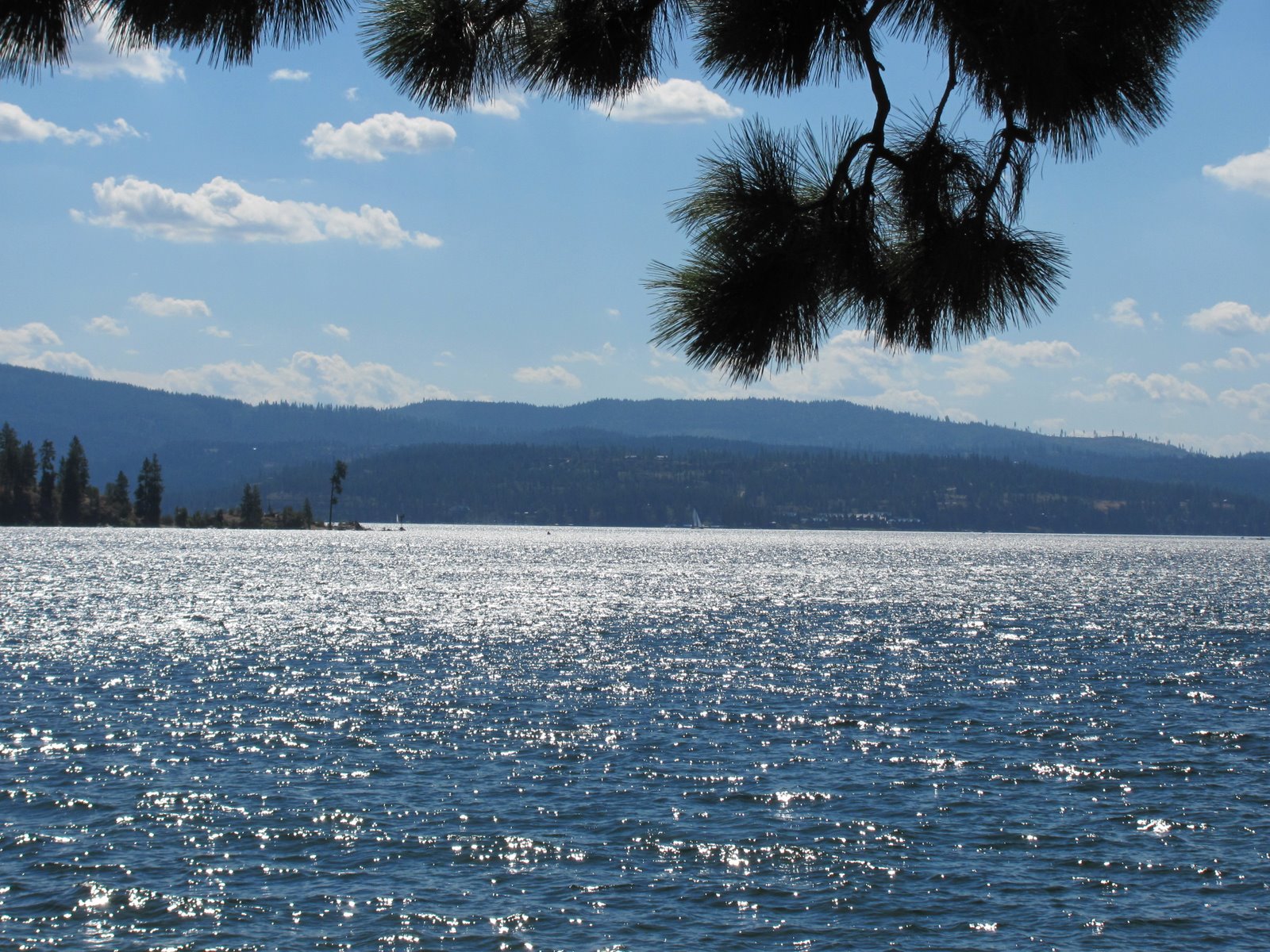
After leaving Post Falls we drove over to the city of Coeur d'Alene and along the shore line. The sky was a beautiful blue although there were strong winds creating white caps on the lake.

From here we are heading to Montana for few days. We had planned on heading up to Canada, however upon checking the weather (37* and rain) we decided to put off that trip to another time.

Hope all is well with everyone, more on our adventures later.

Until then, we love to hear from you also,

Candy and Johnny


Posted by Picasa

Coeur d'Alene, Idaho

On September 1,we said our fond farewells to Anacortes and our friends to once again head eastward! We had a great time in Anacortes but it is time we
head back home (although we will not get there for another two months!)

Our plan was to stay overnight at the Casino at Snoqualmie, Wa. Some of our friends like to stay in casino's parking lots for a night and then continue their travels, so we decided to try a stay at a casino. When we pulled into the parking lot the casino was lovely, new, as it had only been open for a very short time. Unfortunately the parking lot was not as flat as we need to have for our refrigerator to work. So we left as spent the night in a small RV park in Ellensburg, Washington.

Our next destination was Coeur d'Alene, Idaho.

Thr RV park that we stayed at was on Blackwell Island, along the Spokane River. What a lovely setting! The weather is perfect! Warm and sunny. We decided to tour the area. Our first stop was to drive around Hayden Lake. It was supposed to be a very pretty drive. It was but all we could see were the trees, there were very few spots to pull off to view the beautiful lake.

From Hayden lake we headed north to Bayview, along Lake Pend Oreille. We discovered that Lake Pend Oreille was glacially formed during the ice age. It is also believed that the eastern side of the lake was in the path of the ancient Missoula flood. The dam for the Missoula flood is believed to have existed just east of the lake along the Clark Fork River, between the Cabinet and the Bitteroot mountains.

The area around the Lake is the traditional home of the Kalispell Native American Nation. A French fur trapper who entered the region in the 1800's is believed to have given the lake its name. The words "Pend Oreille" are French for and ear-hanging or pendant. Ear pendants were characteristic of the Kalispell Tribe. The lake is shaped much like a human ear when viewed from above or on a map.

During World War II, the south end of the lake was the second largest navel training ground in the world. Built as a result of the Japanese attack on Pearl Harbor, the training station is now Farragut State Park. (Faragut State Park is the second largest State Park located in Idaho.) The lake is still used by the Navy's Acoustic Research Detachment to test large scale submarine prototypes: the significant depth of the lake gives acoustic properties similar to the open ocean.

It was a beautiful setting and we stayed for lunch on the floating dock restaurant.
Tomorrow we are off to the Farmers Market and Post Fall.....

More later,
Until then,

Candy and Johnny

Posted by Picasa

Whale Watching - 1


It was a beautiful Friday evening as we set sail on the Whales-watching ship, the Island Explorer. As we motored past several of the San Juan Islands a Bald eagle was spotted along the shore. Quite an impressive sight! On the way out to the watching area we encountered a harbor seal playing in the surf. We finally found some whales.
We were told that the whales that were feeding in the area were "Minke" whales.

Minke whales are part of the rorquals, a family that includes the humpback whale, the fin whale and the Blue whale.

The Minke Whales are the second smallest baleen whale - only the pygmy right whale is smaller. Upon reaching maturity (6-8 years) males measure an average of 23 feet in length and females about 24 feet in length.

The Minke whale is a black/grey color on the top and white on the bottom. Common minke whales (northern hemisphere variety) are distinguished from other whales by a white band on each flipper. Minke whales typically live for 30-50 years.
Due to their relative abundance minke whales are often the focus of whale-watching cruises. Minke whales are frequently inquisitive and engage in "human-watching". Minkes do not raise their flukes out of the water when diving and are less likely to breach (jump clear of the sea surface). This combined with the fact that minkes can stay submerged for as long as 20 minutes (or possibly their bad breath) has lead some whale watchers to label them 'stinky minkes'.

In 2010, a minke whale swam for 2 hours with Jody Nelson who was stand-up paddle surfing from Santa Catalina Island to Dana Point in Southern Calif. The whale swam close to her, rolled around repeatedly alongside her, and blew bubbles beneath her board.

We had hoped to see some Orca whales that had been the area, however they must have moved out to deeper water. As the sun was setting in the west we headed back to shore.

To see those photo's, please see the next blog page.

Our time here in Anacortes is coming to an end and we will begin our trip back toward Florida soon.

That is all for now,

Candy and Johnny

Whale Watching - 2


We had a great time on the whale-watching tour! As we headed back to the dock, Mt. Baker was visible off in the distance. The sun setting in the west was so beautiful! The sky went from yellow to a wonderful pink!
Another great day in the life of an RVer.

Love to all for now,
Candy and Johnny

Posted by Picasa